How to Properly Clean Your Car Interior Like a Pro

Ah, the car. Our trusted companion on road trips, morning commutes, and weekend errands. No matter how much we try to keep it pristine, over time, dust, dirt, and mysterious stains begin to settle. From leftover coffee spills to the occasional food crumb, it’s easy for things to get out of hand. But don’t worry, I’m here to show you how to give your car’s interior the love it deserves with a thorough, professional-style cleaning.

If you’re:

  • Struggling to remove stains from your car seats,
  • Battling dust on the dashboard,
  • Wondering how to keep your interior looking fresh,

Then this guide is for you. Ready to roll up your sleeves and get started? Let’s dive in!

Why Should You Clean Your Car’s Interior Regularly?

Let’s be real – a clean car just feels better. But it’s not just about aesthetics. Regularly cleaning your car’s interior extends the life of your upholstery, carpets, and dashboard, while also improving air quality inside. Dirt, grime, and dust can wear down materials over time, and an unclean interior can lead to lingering odors and even mold growth if spills aren’t addressed quickly.

In short: a clean car isn’t just nice to look at – it’s good for your health and wallet.

Step-by-Step Guide to Cleaning Your Car Interior

1. Clear Out the Clutter

First things first: it’s time to remove all the random items that have accumulated in your car. Whether it’s old receipts, reusable shopping bags, or forgotten water bottles, clear everything out. You’ll have a fresh, clutter-free space to work with, making the actual cleaning process much easier.

Pro Tip: Check under the seats and in cup holders for any loose change or forgotten treasures that may have slipped through the cracks!

2. Vacuum the Entire Interior

Now that the clutter is gone, it’s time to break out the vacuum. If you’ve been avoiding this step because of the awkward corners and tight spaces in your car, don’t worry! With the right attachments, you can reach even the most hidden crumbs.

  • Start with the seats and carpets: Use a brush attachment to loosen any dust or dirt stuck to the fabric. Be sure to get into the crevices between the seats.
  • Move to the mats: Remove them from the car and give them a good shake before vacuuming. This will get rid of loose dirt and debris.
  • Don’t forget the dashboard and vents: Dust and dirt love to settle here. Use a soft brush attachment to vacuum these areas without scratching the surface.

Pro Tip: If you have pet hair stuck to your seats, try using a rubber glove to rub the upholstery before vacuuming. The hair will cling to the glove, making it easier to remove.

3. Wipe Down the Hard Surfaces

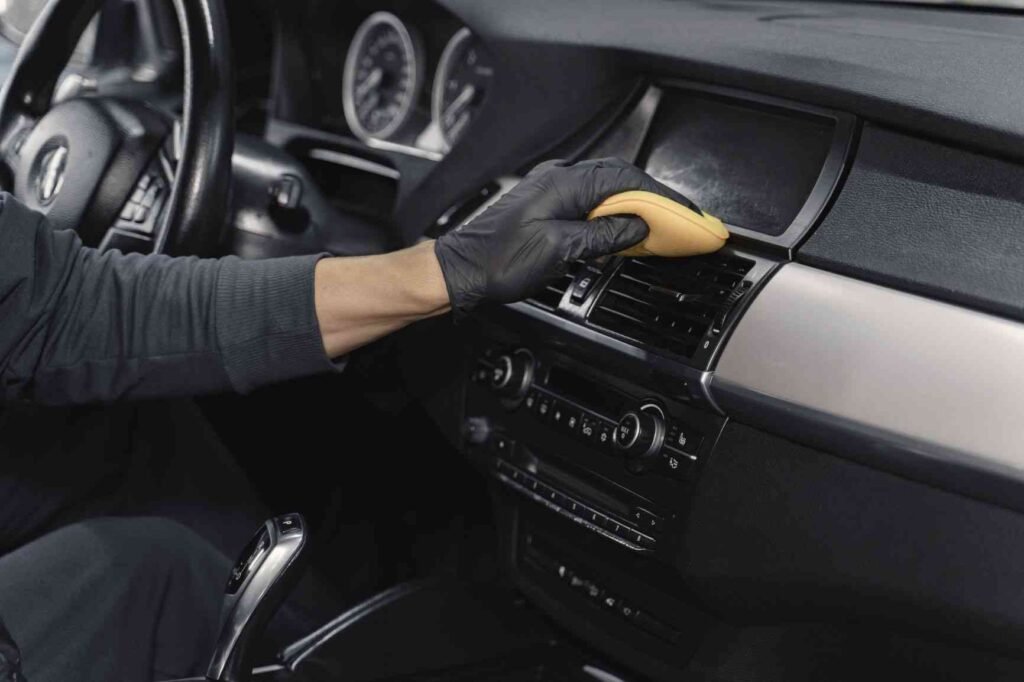
Dashboards, center consoles, and door panels collect dust, fingerprints, and sometimes that mysterious sticky residue. Grab a microfiber cloth and an all-purpose cleaner, and gently wipe down all the hard surfaces. Pay extra attention to areas that are touched often, like the steering wheel and gear shift.

Be cautious with cleaners: Avoid any products containing ammonia, as they can damage your car’s interior materials. Stick to mild, car-safe cleaners or a simple mix of warm water and mild dish soap.

4. Clean the Car Seats Based on Material

Here’s where things can get tricky. Different materials require different cleaning methods, so make sure you know what you’re working with before you dive in.

For Cloth Seats:

  • Use a fabric cleaner or mix a solution of warm water and dish soap.
  • Apply the cleaner with a spray bottle and scrub the fabric with a soft brush or cloth.
  • Blot the area with a dry towel to absorb moisture and allow the seats to air dry.

For Leather Seats:

  • Wipe the seats with a damp cloth to remove surface dust.
  • Use a leather cleaner or a mixture of water and a small amount of vinegar.
  • After cleaning, apply a leather conditioner to keep the material soft and prevent cracking.

Pro Tip: Always do a patch test before applying any cleaner to a large area of your seats, especially if you’re using a new product. This helps ensure that the cleaner won’t discolor or damage the fabric.

5. Tackle the Carpets

Much like your home’s carpet, car carpets can accumulate a lot of dirt and stains over time. Whether it’s coffee spills or muddy shoes, there’s no need to panic. Here’s how to clean them:

For Basic Dirt and Stains:

  • Start by sprinkling baking soda over the affected area. Let it sit for a few minutes to absorb any odors.
  • Vacuum up the baking soda, then treat any visible stains with a mixture of water and mild dish soap. Use a soft brush to scrub the area.

For Tough Stains:

  • Mix a solution of vinegar and water (1:2 ratio). Spray the mixture on the stain and scrub with a cloth or brush.
  • Let it sit for a few minutes before blotting with a clean towel. Repeat the process until the stain is gone.

Pro Tip: If you spill something in the car, clean it up right away to prevent stains from setting. The quicker you act, the easier it will be to remove.

6. Clean the Windows

Clean, streak-free windows are essential for visibility and overall aesthetics. Use a dedicated glass cleaner or a mixture of vinegar and water to wipe down both the interior and exterior of your car’s windows.

How to avoid streaks:

  • Spray the cleaner directly onto a microfiber cloth (not the window itself) to avoid drips.
  • Wipe in circular motions, then finish with vertical strokes for a streak-free shine.

7. Freshen Up the Air

Now that your car is clean, it’s time to make it smell as good as it looks. Here are a few options:

  • Baking soda: Sprinkle some on the seats and carpets, let it sit for a few hours, then vacuum it up to absorb odors.
  • Essential oils: Add a few drops of your favorite essential oil to a cotton ball and place it under the seats for a natural, long-lasting scent.
  • Air fresheners: There are plenty of car-specific air fresheners available in a variety of scents.

Pro Tip: Keep a small bag of activated charcoal in the car to naturally absorb odors over tim

DIY Hacks for Common Car Cleaning Problems

Here are a few quick DIY solutions for common car cleaning issues:

  • Foggy headlights: Rub a small amount of toothpaste on the headlights with a soft cloth, then rinse with water. The mild abrasive helps remove oxidation and restores clarity.
  • Sticky cupholders: Pour warm water and dish soap into the cupholders and scrub with an old toothbrush. For tough residue, let the solution soak for a few minutes before scrubbing.
  • Pet hair: Rub a pumice stone or a rubber glove over your seats to lift stubborn pet hair before vacuuming.

When to Call in the Professionals

While DIY cleaning works wonders for regular maintenance, sometimes a professional touch is needed – especially for deep stains, heavy dirt buildup, or delicate fabrics that require special care. Professional detailers use advanced techniques like steam cleaning or hot water extraction to give your car a showroom-ready finish.

If you don’t have the time or equipment to give your car the thorough cleaning it needs, consider booking a professional service. You’ll be amazed at how fresh and rejuvenated your car will feel afterward.

Final Thoughts

A clean car interior makes every drive more enjoyable, and it’s easier to maintain than you might think. By following these steps, you can give your car a professional-level clean from the comfort of your driveway. Whether you’re tackling dirt on your dashboard, stains on the seats, or odors that just won’t go away, these tips will help you keep your car looking and smelling fresh.

So, next time you notice a little dirt buildup or a spilled drink, you’ll know exactly what to do. Happy cleaning!

Solving Common Cleaning Challenges: Tips for a Spotless Home

Maintaining a clean home can sometimes feel like a never-ending task, especially when dealing with specific cleaning challenges that arise from everyday living. Whether you’re battling stubborn stains, pesky odors, or tricky spots, knowing how to handle these common issues effectively can make a huge difference. In this article, we’ll address some of the most frequent household cleaning challenges and provide practical solutions to help you achieve a spotless and fresh home.

1. Stubborn Stains on Carpets

Carpets can easily fall victim to spills and stains, which can be difficult to remove. Here’s how to tackle some common stains:

  • Red Wine: Blot the stain with a clean cloth to absorb as much wine as possible. Sprinkle baking soda over the area to absorb the remaining liquid. Vacuum after the baking soda has dried. For stubborn stains, use a mixture of white vinegar and water, applying it to the stain and blotting with a cloth.
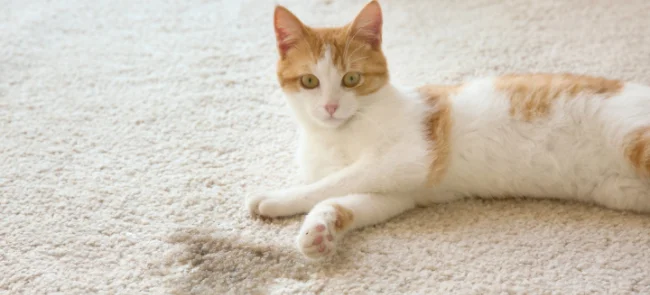
  • Pet Urine: Blot the area with paper towels to absorb as much urine as possible. Mix a solution of equal parts white vinegar and water, and apply it to the stain. Blot the area with a clean cloth, then sprinkle baking soda over the spot to neutralize odors. Vacuum once the baking soda is dry.
  • Grease: Sprinkle cornstarch or baking soda on the stain to absorb the grease. Let it sit for 15-30 minutes before vacuuming. For a more thorough clean, apply a mixture of dish soap and warm water to the area and blot with a cloth.

2. Removing Mildew and Mold

Mildew and mold can develop in damp areas, such as bathrooms or basements. To tackle these issues:

  • Bathroom Tiles: Mix equal parts white vinegar and water in a spray bottle and apply to affected areas. Let it sit for 10-15 minutes before scrubbing with a brush. For tougher mold, use a solution of one cup bleach to one gallon of water, and ensure good ventilation while cleaning.
  • Shower Curtains: Wash plastic shower curtains in the washing machine with warm water and a cup of baking soda. For fabric curtains, add a cup of white vinegar to the wash cycle. If the mold persists, hand scrub with a mixture of baking soda and water.

3. Dealing with Pet Hair

Pet hair can be a persistent nuisance, especially for those with furry friends. Here’s how to manage it:

  • Furniture: Use a lint roller or rubber squeegee to remove pet hair from upholstery. You can also use a vacuum with a pet hair attachment for a more thorough clean.
  • Carpets: Vacuum regularly with a vacuum designed for pet hair. Consider using a pet-specific vacuum or one with a rotating brush to lift hair from the carpet fibers.
  • Clothing: To remove pet hair from clothing, use a lint roller or run the items through the dryer on a low heat setting with a few dryer sheets, which can help loosen the hair.

4. Combatting Lingering Odors

Persistent odors can make even the cleanest home feel less inviting. Here are some ways to freshen up:

  • Musty Smells: Place bowls of white vinegar or baking soda around the room to absorb odors. For more severe mustiness, clean affected areas with a mixture of water and white vinegar.
  • Cooking Smells: Simmer a pot of water with lemon slices, cinnamon sticks, or cloves on the stove to neutralize cooking odors. You can also use an air purifier or open windows to improve ventilation.
  • Trash Odors: Regularly clean your trash cans with a mixture of water and dish soap. To control odors, sprinkle baking soda in the bottom of the can before adding new trash bags.

5. Cleaning Hard-to-Reach Areas

Certain areas of your home, like high shelves and behind appliances, can be challenging to clean. Here’s how to tackle these spots:

  • Ceiling Fans: Use a pillowcase to dust ceiling fan blades. Spray the inside of the pillowcase with a mixture of water and a small amount of dish soap, then gently wipe the blades. The pillowcase catches dust and prevents it from falling onto furniture or the floor.
  • Behind Appliances: Move appliances like the refrigerator and stove periodically to clean behind them. Use a vacuum or broom to remove dust and debris. For a more thorough clean, wipe down the walls and floor behind the appliances.
  • High Shelves: Use a duster with an extendable handle to reach high shelves. Alternatively, wrap a microfiber cloth around a broom handle and secure it with rubber bands to dust hard-to-reach areas.

6. Tackling Greasy Kitchen Cabinets

Kitchen cabinets often accumulate grease and grime over time. Here’s how to clean them effectively:

  • Cabinet Surfaces: Mix a solution of warm water and dish soap, and use a soft cloth or sponge to wipe down cabinet surfaces. For tougher grease, add a small amount of baking soda to the soapy water. Rinse with clean water and dry with a cloth.
  • Cabinet Doors: Remove grease from cabinet doors by spraying them with a mixture of equal parts white vinegar and water. Wipe with a clean cloth and rinse with a damp cloth to remove any residue.

Conclusion

Dealing with common household cleaning challenges can be daunting, but with the right techniques and tools, you can maintain a spotless and inviting home. From removing stubborn stains and combating mildew to managing pet hair and tackling hard-to-reach areas, these tips will help you address a variety of cleaning issues efficiently.

Remember, maintaining a clean home is an ongoing process, but knowing how to handle these common problems can make the task much easier. For more specialized cleaning tasks, consider enlisting professional cleaning services to ensure your home stays in top shape.

With these strategies in your cleaning arsenal, you’ll be well-equipped to keep your home looking and feeling fresh and welcoming.

How to Get Paint out of Carpet

There are many ways paint can end up on your carpet – it could be from accidentally spilling a can of paint, splattering it while doing a project, or even tracking it in on your shoes. Whatever the cause is, it all ends the same way – with an undesirable paint stain on your nice carpet.

But don’t panic, not all is lost. In this article, we are going to take a look at the different methods you can use for getting paint out of carpets.

So, if you:

  • Have accidentally stained your carpet with paint;
  • Want to know how to get paint out of carpet;
  • Are looking for methods to clean up different types of paint.

Then this article will answer your questions!

Types of paint and how to get them out of carpet

Most paints have three main components: a pigment, a binder and a solvent, and to improve the paint’s qualities, sometimes an additive is included. The cleaning method and the amount of effort involved during the cleanup stage largely depend on the type of solvent in the paint.

There are two kinds of solvents – water and oil. If it’s water, you’ll be able to easily clean up the mess on your carpet. However, if the solvent is oil-based, you will need paint thinner to dissolve the stain. And while dried oil-based paint spots are not impossible to remove, the cleaning process can be tedious and time-consuming and often professional help is required for complete removal.

Things to consider before removing paint from carpet

  • Always wear protective gloves, safety glasses, and a face mask when using harsh cleaning products or solvents.
  • Before you try any of the methods, first, check with your carpet care guide whether it’s suitable for your rug. Always test spot removal solutions for colour fastness on an inconspicuous area of your textile floor covering.
  • Don’t rub the surface, blot it instead. To prevent further spreading of the stain, work your way from the outer edges to the centre of the affected area.
  • Don’t use dry vacuum cleaners to clean up liquids. Unlike dry cleaners, wet vacuum cleaners are waterproof and their most important parts are well-protected against water and other liquids.
  • Be extra careful when you use strong cleaning products on wool carpets.
  • Professional carpet cleaners have the proper equipment and the know-how of dealing with stubborn stains. Including ones caused by paint, milk products, blood, wax (hair removal, crayon, soy), wine, and more.

Below you’ll find step-by-step guides on how to remove general water-based, acrylic, and oil-based paints from your carpeting. Bear in mind, that dried-up dye tends to be a bit harder and time-consuming to get rid of.

How to get water-based paint out of carpet

Time needed: 30 minutes.

  1. If the paint stain is still fresh, just blot it with a paper towel.

    Avoid scrubbing, as this will make it worse.

  2. If the paint stain is dry, mix hot water and a little bit of dish detergent.

    Pour the mixture into a spray bottle and shake well.
    Mist the stained area and let the solution sit for a few minutes to weaken the paint.

  3. Use a dull knife or a pin to scrape off what remains of the stain.

    Once the paint has softened, use a pin or a dull knife to scrape off the residue. Continue to add the solution while you scrape.

  4. Use a handheld steamer if the paint is still dry

    To further loosen the paint stain from the carpet, use a handheld steamer while you scrape.

  5. Blot the treated area.

    Take a clean cloth and dip it in the solution from step 2. Blot the paint stain until it’s removed, then vacuum the area to lift the fibres.

How to remove acrylic paint from carpet

  1. If the paint is still wet, simply blot the surface using a paper towel dipped in water.
  2. If the paint spot is dry, brush it with the help of a toothbrush. Scrape the loosened chunks of paint carefully with needle-nose pliers or a pin.
  3. Dampen a rag and wet the spot first, then blot the paint stain with a mixture of laundry detergent and warm water. Again, don’t scrub the spot, just gently tap it.
  4. If the paint stain remains solid, moisten a rag with a bit of acetone and pat the spot to dissolve the paint.
  5. Blot the stained area again using the solution of laundry detergent and warm water.
  6. If needed, repeat the whole process.
  7. Vacuum the carpet once it’s dry to lift the fibres up.

How to remove latex paint from carpet

  1. Gently dab the spot to remove as much fresh paint as possible. Don’t scrub in order to avoid forcing paint deeper into the carpet fibres.
  2. Soak the stained area using a mixture of one cup of warm water and one teaspoon of non-alkali dishwashing detergent.
  3. If the paint has dried, scrape off as much as you can with a knife. Remove or loosen large spots with needle-nose pliers and saturate the affected area with water. Vacuum with a wet/dry vacuum.
  4. If the paint stain is on the stubborn side, consider using a steam iron to clean the tinted area. Don’t place the iron directly on the carpet. Simply hold it over and allow the steam to further loosen the paint.
  5. Blot again with a clean cloth using the solution from above. Work from the outside edges of the dye spot to the centre, gently dabbing the area.
  6. Once the carpet is dry, vacuum the treated zone to freshen the fibres.

How to get oil-based paint out of carpet

  1. Dab, don’t scrub, the stain with a cloth or paper towel dampened in the prescribed thinning solvent for the paint. If not possible, apply a small amount of turpentine to the affected area.
  2. If the oil paint stain is dry, apply steam to the stain to soften it with the assistance of a portable steamer. If you don’t have one in your possession, blot with a clean rag using one of the solvents described above.
  3. Gently try to break up the dried paint with a needle or pin. Take your time, so you don’t damage the carpet fibres.
  4. Blot and pick up the dried particles until the stain is removed.
  5. Rinse the area using a solution of mild dishwashing detergent and lukewarm water.
  6. Once dry, vacuum the carpet to rejuvenate the fibres.

When all else fails, get your carpet professionally cleaned

In case you’ve tried everything, including the methods above, it may be time to turn to a professional carpet cleaning service. The carpet technicians will treat the paint stain with specialised products that you can’t find on the shelves of the local market.

Fantastic Services can offer you two effective carpet cleaning methods – hot water extraction and dry cleaning. Not only that, but we can also apply a thin layer of a stain protection product to prolong the effect of our services.

Frequently asked questions about removing paint from carpet

Q: How do I know if the paint stain on the carpet is water or oil-based?

A: When not sure whether the stain is from water-based or oil-based paint, always use the water-based paint cleaning method, simply because it is more fibre-friendly. If it doesn’t work, then proceed to the oil-based paint cleaning method using solvents.

Q: How do you remove dried paint?

A: Use a blunt knife to scrape off as much dried paint as you can. Mix equal parts of liquid dish soap and warm water, then take a stiff brush and apply the solution to the dried paint stain. Clean the treated area with water and a sponge. Let the carpet dry and after that vacuum it to restore the fibres.

Q: How does baking soda remove paint from carpet?

A: Baking soda acts as a whitening solution and it can be used to remove stains or odours. You can use a mixture of baking soda and warm water to soften a paint stain on your carpet. However, if you treat dried oil paint, the solution might not be able to completely clean the spot and get the paint out of the carpet. In that case, it may be necessary to use a proper solvent and steamer to remove the paint.

Takeaways

  • The methods of removing paint from the carpet will vary depending on the type of solvent in the paint.
  • Pay attention to the cleaning label and test your chosen cleaning method on an inconspicuous area first.
  • Always wear protective gear when trying to get paint out of carpet with harsh chemicals.
  • You can easily clean up water- and acrylic-based paint stains using dish or laundry detergent, respectively.
  • Use non-alkaline dishwashing liquid to remove latex paint from carpet.
  • You will need paint thinner to get rid of oil-based paint stains.
  • Be careful when using turpentine, as it’s highly flammable.


Attention! No matter of the cleaning method, remember to always do a small spot test on hidden part of your carpet. Depending on the size, nature, and age of the stain, some of them might be impossible to remove. We cannot take responsibility if any of the above-mentioned methods do not work on your carpets.

7 Ways to Remove Tea Stains from Carpet

There’s nothing quite like sitting down with a hot cuppa — whether it’s black, green, or herbal, we Irish do love our tea. But that same comforting brew can turn on you fast when it ends up splashed across the carpet instead of in your mug.

Don’t panic — tea stains might look fierce, but with a bit of patience and some everyday household products, you can get your carpet looking spotless again.

Why Tea Leaves Stubborn Stains

The reason tea stains are so tricky is because of a natural compound called tannins. These are the same pigments that give tea its rich colour (and your mouth that dry feeling after a strong brew). Once they soak into carpet fibres, they hold on tight — so the quicker you act, the better your chances.

1. Blot First – Always

No matter what you use to treat the stain, the golden rule is: don’t rub, blot.
Use a clean, dry cloth or paper towel to soak up as much of the spill as you can. Rubbing will only push the stain deeper into the fibres.

2. Baking Soda Magic

What you’ll need:

  • A small bowl of baking soda

  • A damp cloth

  • Cold water

How to do it:

  1. Sprinkle baking soda directly over the stained area.

  2. Gently press it in using a damp cloth.

  3. Leave it for 15–20 minutes to draw out the stain.

  4. Rinse with cold water and blot dry.

Baking soda helps lift colour pigments and neutralises any odour at the same time.

3. Salt and Club Soda Trick

What you’ll need:

  • A handful of table salt

  • A splash of club soda

How to do it:

  1. Blot away excess tea.

  2. Cover the stain with salt.

  3. Pour a little club soda on top — just enough to dampen it.

  4. Wait 10 minutes, then blot again and rinse with water.

This old-school method works brilliantly for fresh spills.

4. White Vinegar Solution

What you’ll need:

  • 1 part white vinegar

  • 2 parts warm water

  • A spray bottle

  • A microfibre cloth

How to do it:

  1. Mix the vinegar and water in the spray bottle.

  2. Spray it directly on the stain.

  3. Gently dab with the cloth until the mark fades.

  4. Finish with a clean rinse of cold water.

Vinegar breaks down tannins naturally, leaving your carpet fresh and residue-free.

5. Gentle Dish Soap Cleaner

What you’ll need:

  • A teaspoon of mild dish soap

  • 2 cups of warm water

  • A sponge or cloth

How to do it:

  1. Mix soap and water in a bowl.

  2. Dip a cloth into the solution and blot the stain.

  3. Rinse with cold water and blot dry.

This one’s ideal for delicate carpets or when you don’t want to risk strong chemicals.

6. Borax Paste (For Old or Set-In Stains)

What you’ll need:

  • 3 parts borax

  • 1 part warm water

  • A toothbrush

How to do it:

  1. Stir the mixture into a paste.

  2. Apply gently over the stain and scrub with the toothbrush.

  3. Let it dry completely, then vacuum up the residue.

Borax works wonders on older, stubborn marks that have had time to settle.

7. Commercial Carpet Stain Remover

If none of the DIY options do the trick, try a professional-grade carpet cleaner. Just make sure it’s safe for your carpet type — always spot-test in an inconspicuous corner first. Follow the instructions on the bottle and never oversaturate the area.

When in Doubt, Call the Pros

Sometimes, no matter how careful you are, a stain just won’t budge. That’s when it’s time to call in a local professional carpet cleaner. They use hot water extraction or dry cleaning methods that lift deep-set stains without damaging your flooring.

If you’re based in Ireland, book a reliable service near you — it’ll save you time and keep your carpet fresh, soft, and spotless.

Key Takeaways

  • Act fast — the quicker you blot, the better.

  • Use gentle, natural products first.

  • Always test a small patch before applying anything new.

  • When in doubt, call a professional cleaner.

How to Clean a Shag Rug

Shag rugs have been around for a while, and recently they have made their fabulous return in many contemporary homes. A simple shag rug can give any cold, empty room a cosy and welcoming appearance. But in order for it to have a happy and long life, you need to know how to clean any shag pile rug properly and what to do for its regular maintenance.


So keep on reading if you are:

  • wondering what is the best way to clean a shaggy rug;
  • trying to revive a shaggy rug;
  • looking for ways how to make a shaggy rug fluffy again;

Before you start cleaning or trying any of the described methods, remember that there are many convincing imitations of shag rugs. Even if they look and feel like the original, those rugs may be completely synthetic, thus making the cleaning methods completely different.

How to clean a shag or deep pile rug

What makes shag rugs so comfortable and fun to lie on, is their long and flappy pile. It’s soft, warm and probably your kids’ favourite place to play in the winter. That same pile is also the reason why shag rugs are a bit tricky to clean. However, tricky does not mean impossible, so don’t worry.

Here is how to wash a shag rug successfully and most importantly – without damaging it.

How to vacuum a shag rug properly

  • Take the shag rug outside and give it a good beating to remove all the loose dirt and dust.
  • Take it back inside and vacuum carefully. Check which one of your cleaner’s settings will not suck off the fibres of the rug, and go with it. If you don’t have a suitable “high pile” setting on your vacuum cleaner, you can clean the rug with an upholstery attachment by going between the rows of thread.
  • Rugs have two sides, so flip it over and vacuum the underside as well. Once a month is usually enough, but that really depends on the level of traffic. To avoid sucking in the rug, you can step on one of its ends.

How to deep clean a shag rug

The obvious choice here would be to actually call a professional carpet technician, as they not only know every type of rug there is and how to clean it, but also come with a special carpet cleaning machine, that doesn’t damage the rug. Still, if you want to learn how to clean your shaggy rug by hand, this is what you need to do:

  1. Make a cleaning solution by mixing 4 parts of cold water and 1 part of any delicate laundry detergent. It’s best if you do it in your bath or a washtub. The detergent must be as simple as possible – no softeners included, no scents and definitely no bleach.
  2. Take your shag rug and soak it in the tub. Swish it around the cleaning solution for approximately 20-30 minutes.
  3. Take the rug out and squeeze it carefully to remove all of the detergents. Place it somewhere close.
  4. Empty the tub of the remaining dirty liquid and fill it with clean cold water.
  5. Rinse the rug thoroughly.
  6. Squeeze it again until it’s no longer dripping and leave it to air-dry in a shady place. Direct sunlight will not speed up the drying process and will damage the colours of your shag rug.
  7. You can dry it faster by using a fan to blow on the rug for a couple of hours. However, bear in mind that shaggy rugs absorb a lot of water and will need a bit more time to become completely dry.

Shag rug cleaning with dry solvents

Although a bit risky, you can clean your rug with dry solvents. On the good side, you won’t have to use water in the process this way. You will need a dry carpet shampoo, which comes in the form of powder.

  1. Start by vacuuming the rug thoroughly by following the instructions above.
  2. Sprinkle the powder equally over the rug.
  3. Spread the shampoo gently by using a soft brush.
  4. Let the product work for around an hour.
  5. Vacuum the powder.

How to get spills out of a shag rug

The everlasting rule of removing the spill right after it has occurred, applies double when it comes to shag rugs. The fibres are very quick to soak up any type of liquid, making it almost impossible to clean up afterwards. So, if you happen to spill a glass of red wine over your carpet, it’s crucial that you act fast.

Immediately grab a white cloth, or any other colourless fabric piece, and blot the spill so it transfers from the carpet. Do not rub the spot, it will only make it even worse.

  1. By using a white, absorbent cloth, blot the spill slowly. This will transfer it from the rug to the cloth.
  2. Rinse the rag and repeat the step, until all of the liquid has transferred from the shag rug.

If this doesn’t help, consider doing the following:

  1. Mix a solution of equal parts white vinegar and lukewarm water.
  2. Take a clean cloth and soak it in the solution.
  3. Before going for the spill, perform a spot test on a small, hidden area, like on a corner, for example. This way you make sure that the fibres won’t get damaged by the cleaning solution.
  4. You may gently wipe the spill with the cleaning cloth, without rubbing too hard.
  5. Repeat this until the spill is completely removed from the shag rug. You may have to rinse and re-wet the cloth a couple of times until the area is completely clean.

How to make a shaggy rug fluffy again

Take a towel out of the washing machine when it’s still damp to revive a shaggy rug. Place it over the flattened area and iron it gently (not hot). Until the carpet fibres pop up again, repeat the process. The heat and dampness will help reset the fibres, and your rug will be nice and fluffy again.

Takeaways

  • Shag rugs are a great addition to almost any type of room but they require special care.
  • Place the rugs in areas with lower foot traffic and a smaller chance of damage.
  • Regular maintenance will not only ease the cleaning of the rugs but will also prolong their life.
  • You can use the DIY methods above to remove single rug stains and to clean your rug generally.
  • It’s best to leave rug cleaning to professionals so you don’t accidentally damage it.

How to Clean Dried Cat Urine From Carpet

If you’ve ever shared your home with a cat, you know they’re usually fastidious about cleanliness. But every cat owner also knows that accidents happen — and when they do, they tend to happen on the carpet. Few things are as unpleasant as discovering that unmistakable smell of cat urine that just won’t go away.

Maybe your cat missed the litter box. Maybe it’s acting out because of stress, illness, or a recent change in the home. Whatever the reason, you’re left with a stain that feels impossible to clean. The good news? It’s not. You can get rid of the smell and the mark completely — if you know what you’re doing.

Let’s talk about what causes this, how to find the source, how to clean it properly, and what to do to make sure it never happens again.

Why Cats Pee Outside the Litter Box

When your cat suddenly starts using the carpet as a toilet, it’s not being spiteful. There’s always a reason. Sometimes it’s medical — urinary tract infections, bladder stones, kidney problems, or cystitis can all make urination painful, and the cat may start to associate its litter box with discomfort.

Other times, it’s stress. Cats are creatures of habit, and anything from a loud renovation to a new pet can throw them off balance. Even the type or location of the litter box can trigger avoidance. If the box is too small, too dirty, or placed somewhere noisy, your cat might decide the living room carpet seems like a better option.

If your cat’s behaviour changes suddenly, always start with a vet visit. Once you rule out medical causes, you can focus on solving the environmental ones.

Step One: Find the Source of the Smell

You can smell it, but you can’t see it. That’s the tricky part. Dried cat urine doesn’t always leave a visible mark, especially on darker carpets. The best way to find it is to check corners, under furniture, and along walls. Cats prefer quiet, hidden spots.

If that doesn’t work, use your nose or invest in a small UV torch. In the dark, a blacklight will make urine spots glow slightly. Once you find the stain, mark it with tape or a small piece of paper so you can come back to it when you’re ready to clean.

Step Two: Loosen and Lift the Stain

Once you know where the problem is, it’s time to tackle it. The goal is to lift the dried residue and neutralise the smell. You don’t need fancy products — in fact, the most effective cleaners are probably already in your kitchen.

Start with white vinegar and baking soda. Mix equal parts vinegar and water in a spray bottle. Soak the area thoroughly, then let it sit for 20 to 30 minutes. Blot (don’t rub) the area with an old towel or cloth. Once most of the moisture is gone, sprinkle baking soda over the spot and let it dry completely. When it’s dry, vacuum it up. This method neutralises odours and helps lift the stain without damaging carpet fibres.

For older stains, you can add hydrogen peroxide to the mix. Sprinkle baking soda on the area, then pour a mixture of one teaspoon of mild dish soap and 250 ml of hydrogen peroxide on top. Gently scrub the spot with a soft brush, leave it to dry, and vacuum again. It’s a powerful combination that breaks down the compounds that make cat urine smell so strong.

Step Three: Bring in the Enzymes

Sometimes, no matter how much vinegar or peroxide you use, the smell lingers. That’s where enzyme cleaners come in. These are products designed specifically for pet urine. The enzymes actually break down the uric acid crystals in the stain — the real source of the odour — instead of just masking it.

You can find these cleaners in pet shops or supermarkets. Pour a generous amount directly onto the area, let it soak for about fifteen minutes, then blot dry. Don’t rush the drying process — the enzymes need time to work. If the smell remains, repeat the process the next day.

Step Four: Tackle the Odour

Even if the stain looks gone, the smell can hang around for days, especially in humid weather. To get rid of it completely, apply another light mist of vinegar solution or an enzymatic spray. Cover the area with a damp towel overnight. This helps the cleaning agents continue to work deep in the carpet fibres. The next day, remove the towel and let the carpet air dry fully.

If you’re still catching faint whiffs after that, it might mean the urine soaked into the underlay. At that point, a professional deep clean is usually the only way to eliminate it for good.

Step Five: Prevent It From Happening Again

Once you’ve cleaned up the mess, take steps to make sure you don’t have to do it again. Start by addressing why your cat avoided the litter box in the first place.

Keep the litter box large, clean, and in a quiet area. Scoop it daily, wash it weekly, and avoid strong-scented cleaners that might put your cat off. If you have multiple cats, you should have one litter box per cat plus one extra.

Pay attention to your cat’s stress levels too. New furniture, other pets, visitors, or even moving the litter box can cause anxiety. Try to keep their environment stable, and give them a calm, safe space they can retreat to.

Above all, never punish your cat for accidents. It won’t solve the problem — it’ll make it worse. Instead, focus on figuring out the cause and adjusting your routine accordingly.

When to Call a Professional

Sometimes, despite your best efforts, the smell won’t go away. That’s not your fault — once urine seeps into the carpet pad or subfloor, home cleaning can only do so much. This is when calling a professional carpet cleaner makes sense.

Professional cleaners use special equipment and pet-safe cleaning solutions that reach deeper layers of the carpet. They can remove not only the stain and odour but also bacteria that ordinary cleaning can’t reach. Many also offer sanitisation treatments that leave carpets hygienic and safe for both pets and humans.

For Irish homeowners, getting your carpets professionally cleaned once or twice a year isn’t just about appearance — it’s about hygiene and air quality too.

Final Thoughts

Cat urine on the carpet is frustrating, but it doesn’t have to ruin your home. With the right techniques and a bit of patience, you can remove both the stain and the smell completely. Vinegar, baking soda, hydrogen peroxide, and enzyme cleaners are all reliable options, and acting fast makes all the difference.

And if the problem keeps coming back, remember: it’s not just about cleaning. It’s about understanding what your cat is trying to tell you and creating an environment where accidents are less likely to happen.

Clean carpets, a happy pet, and a fresh-smelling home — that’s a win for everyone.

How to Clean Nylon Carpet

How to Clean and Care for Nylon Carpets

Nylon carpets have become one of the most popular flooring choices in Irish homes and offices. They’re tough, practical, and stylish — a smart option for busy households that want something durable yet comfortable underfoot. But even though nylon is known for its resilience, it still needs regular care to stay clean, soft, and looking its best.

If you’ve been wondering what makes nylon carpets so popular, how to clean them properly, or how often they should be maintained, this guide covers everything you need to know.

What Exactly Is a Nylon Carpet?

Nylon is a synthetic fibre that first appeared in the 1930s as a replacement for silk. It quickly became one of the most widely used materials in the world, appearing in everything from clothing and parachutes to ropes and carpets. Its popularity in flooring is no surprise — nylon is tough, springy, and resistant to wear, which makes it ideal for high-traffic areas.

A nylon carpet is made from these strong, flexible fibres that can bounce back after being flattened. That means fewer footprints, fewer vacuum marks, and a longer lifespan compared to most other synthetic carpets.

The Pros and Cons of Nylon Carpets

Every carpet material has strengths and weaknesses, and nylon is no exception.

Pros
Nylon carpets are incredibly durable. They handle heavy foot traffic better than most materials because the fibres can spring back into shape after being pressed down. This elasticity helps the carpet keep its texture and appearance for years.

Modern nylon carpets are also treated with stain-resistant coatings. Although the fibre itself isn’t naturally stain-proof, these treatments create a protective barrier that makes spills easier to clean before they set in.

Another plus is that nylon doesn’t trap moisture or allergens. That makes it a smart choice for anyone with allergies or asthma. It also resists mould and mildew, which is particularly helpful in Ireland’s damp climate.

Finally, nylon holds colour exceptionally well. The dye is added during the production process rather than afterwards, so the colour becomes part of the fibre itself. As a result, it resists fading and stays vibrant even in sunny rooms.

Cons
Nylon’s biggest drawback is price. It’s the most expensive synthetic carpet fibre, which can make it pricier than polyester or polypropylene alternatives.

It’s also slightly less soft than materials like wool or polyester. While modern designs are much improved, nylon still has a firmer texture underfoot.

Lastly, nylon carpets can generate static electricity, especially during dry weather. But let’s be honest — dry air is rare in Ireland, so it’s hardly a dealbreaker.

Is Nylon Carpet Easy to Clean?

Absolutely. One of the biggest advantages of nylon is how well it responds to cleaning. The fibres are strong, abrasion-resistant, and quick to recover their shape. You can even steam clean a nylon carpet without worrying about shrinkage or warping, something you can’t safely do with all materials.

As long as you use gentle methods and the right products, nylon carpets can stay fresh and attractive for many years.

The Best Way to Clean a Nylon Carpet

Spills happen — and the sooner you act, the easier they are to remove. Nylon carpets are forgiving, but you shouldn’t let stains sit too long. Fortunately, you can clean them effectively using simple household materials.

You’ll need:

  • Warm (not hot) water

  • A few white cloths or paper towels

  • A small amount of mild dishwashing detergent

Here’s how to do it:

  1. If the stain is fresh, scoop up any solid material with a spoon or dull knife.

  2. Blot the area gently with a clean white cloth to soak up as much of the spill as possible. Avoid rubbing, which can spread the stain.

  3. Dampen another cloth with warm water and blot again.

  4. Mix a quarter teaspoon of dish soap with one cup of warm water. Dip a cloth into the solution and gently blot the stained area from the outside in.

  5. Let it sit for five minutes, then blot with a clean, dry cloth.

  6. Rinse by dabbing the area with a cloth soaked in plain warm water to remove any soap residue.

  7. Blot again until no moisture remains, and let it air dry completely.

  8. Once dry, vacuum or brush the carpet to restore its texture.

This simple method works well for most food, drink, and dirt stains. For tougher marks or old spills, repeat the process or use a specialised carpet cleaning foam or dry powder product designed for nylon fibres.

How Often Should You Clean a Nylon Carpet?

Regular vacuuming is key. For most households, once a week is enough, but in high-traffic areas like hallways or living rooms, a daily pass with the vacuum can prevent dirt from embedding deep into the fibres.

Every 12 to 18 months, consider a professional steam cleaning. This process lifts deep-set dirt and allergens that normal vacuuming can’t reach, extending the life of your carpet and keeping it hygienic.

If you want to go a step further, applying a fabric protector after cleaning adds an extra layer of defence against stains and spills. It’s an especially smart idea for homes with kids or pets.

Keeping Nylon Carpets Looking New

A nylon carpet is built to last, but a few simple habits can make a huge difference in how it looks over time.

  • Use doormats to reduce tracked-in dirt.

  • Vacuum slowly and in different directions to lift dust from between the fibres.

  • Address spills immediately instead of letting them dry.

  • Rotate furniture occasionally to prevent wear patterns.

When maintained properly, a nylon carpet can look vibrant and new for many years — even in busy Irish households.

Final Thoughts

Nylon carpets have earned their reputation as one of the best all-round flooring options. They’re tough, stylish, and practical, yet easy to maintain. With quick spot cleaning, regular vacuuming, and an occasional professional clean, your carpet will stay fresh, bright, and comfortable underfoot.

If you ever find that ordinary cleaning isn’t enough — especially for stubborn stains or odours — a professional carpet cleaner can restore the original look and feel of your flooring safely. For most homes, that one deep clean every year or so is all it takes to keep your nylon carpet looking its best for the long run.

How to Clean a Wool Rug

A wool rug is more than just a piece of decor — it’s a statement of warmth and quality. It adds comfort, texture, and elegance to any room, making it one of the most desirable flooring options for Irish homes. But while wool is strong and naturally stain-resistant, it still needs the right care to stay fresh and beautiful for years.

If you’re thinking about investing in a wool rug, or already have one that’s looking a little tired, it’s worth learning how to clean it properly. Cleaning wool is different from synthetic fibres — it reacts to moisture and heat in unique ways. Done right, it can look brand new again. Done wrong, you can end up with shrinkage, fading, or a dull, rough texture.

Here’s how to care for your wool rug safely and effectively, using both gentle home remedies and practical maintenance tips.

Why Wool Rugs Need Special Care

Wool is a natural fibre made from animal hair, and that’s exactly what makes it so special. It contains lanolin, a natural oil that helps repel moisture and dirt, keeping the rug cleaner for longer. Wool also has antibacterial properties and doesn’t trap dust the same way synthetic carpets do, which makes it a great choice for people with allergies.

However, that same thick, luxurious texture can also trap dirt deep within the fibres if not maintained regularly. Vacuuming and spot cleaning are key to preventing grime from building up and causing long-term damage.

Routine Wool Rug Cleaning

The best way to keep a wool rug in good condition is through consistent, gentle cleaning. Vacuum it at least once a week using the proper carpet setting. If your rug sits in a busy area, vacuum more frequently. Always move the vacuum from side to side (widthwise), rather than lengthwise, to protect the weave and prevent stretching.

Flip the rug over once or twice a year and vacuum the back as well. This loosens dirt that can become trapped underneath and helps the fibres breathe.

Removing Stains from a Wool Rug

Accidents happen — and with wool, it’s important to act fast. The longer a spill sits, the deeper it seeps into the fibres.

For fresh spills, use a clean, white or light-coloured cloth to blot (never rub) the area. Press gently to absorb as much liquid as possible. Wool reacts poorly to excess water, so use only what’s necessary to lift the stain.

If you’re dealing with something more stubborn, such as wine or coffee, a simple DIY cleaner can do the trick.

Cleaning with Baking Soda

Baking soda is one of the safest natural products for cleaning wool because it’s gentle, non-abrasive, and great at neutralising odours.

Lightly mist the stained area with cold water — just enough to make it slightly damp. Sprinkle baking soda generously over the spot and let it sit for 30 minutes. The powder will absorb oils, moisture, and smells. Once dry, vacuum it up completely and let the rug air out in a shaded, well-ventilated area.

Cleaning with Vinegar

White vinegar is excellent for breaking down organic stains and removing odours like pet urine. Mix half a teaspoon of mild dish soap with two cups of cold water and half a cup of white vinegar.

Before applying it to the whole stain, always test a small hidden area first to make sure the colours won’t bleed. If everything looks fine, gently dab the mixture onto the stained area with a clean sponge or cloth.

Blot again with a dry towel dipped in clean cold water to remove any residue. Use pressure to soak up excess moisture. Once the rug is nearly dry, let it air dry naturally — never use direct sunlight or a heater, as this can shrink or discolour the wool.

If possible, lift the damp section off the floor and place it against a piece of furniture that won’t be damaged by moisture. You can set up a fan to speed up the drying process.

Caring for Your Wool Rug Day to Day

Beyond spot cleaning, proper care makes all the difference in how long your rug lasts. Here are a few things every wool rug owner should keep in mind:

  • Avoid using too much water when cleaning. Wool can hold moisture deep inside, leading to a musty smell or even mould.

  • For pet hair, use a stiff brush instead of a vacuum. Brush gently in the direction of the nap (the natural lay of the fibres).

  • Don’t wash the whole rug unless it truly needs it. Focus on treating stains individually to reduce wear.

  • Keep the rug out of direct sunlight to prevent fading.

  • Rotate it every few months to ensure even wear in high-traffic areas.

When to Consider Professional Cleaning

Even with regular care, wool rugs benefit from a professional deep clean every one to two years. Professionals use cleaning solutions and equipment that are safe for natural fibres, helping restore softness and vibrancy without risk. They also remove embedded dirt that home vacuuming can’t reach.

Professional cleaning is particularly worthwhile for expensive or handmade wool rugs, where improper care could ruin their texture or shape.

Final Thoughts

A wool rug adds warmth and sophistication to any home, but it deserves the right attention. With regular vacuuming, gentle spot cleaning, and careful drying, you can keep it looking beautiful for decades.

Whether you prefer simple DIY methods or professional help, the key is understanding that wool is a natural, living fibre — it needs care, not harsh treatment. Clean it the right way, and it will reward you with years of comfort, style, and charm.

How Long After Cleaning Oven Can I Cook

It’s one of the most common questions people ask after giving their oven a good scrub: how long should you wait before cooking again? The answer depends entirely on how you cleaned it — whether you used natural DIY ingredients, a chemical oven cleaner, or the self-cleaning function built into modern appliances.

While there’s no single rule for every situation, there are a few important safety and hygiene guidelines that every homeowner should know. Let’s break them down.

After Cleaning with DIY Natural Products

If you’ve used a homemade cleaner made from natural ingredients like baking soda, white vinegar, or lemon juice, you’re in luck. These ingredients are non-toxic and leave no harmful residues behind. Once you’ve wiped away any remaining paste and rinsed the surfaces, you can use your oven almost immediately.

This is the biggest advantage of DIY cleaning — it’s safe, simple, and environmentally friendly. The only downside is that it can take a bit longer to scrub away stubborn grease, especially if the oven hasn’t been cleaned in a while. But once it’s spotless, you can preheat and cook straight away without worrying about fumes or contamination.

After Using a Commercial Oven Cleaner

Commercial oven cleaners are powerful, fast-acting, and convenient — but they’re also full of strong chemicals such as sodium hydroxide and surfactants. These ingredients break down baked-on grease and carbon quickly, but they can be harmful if not rinsed away thoroughly.

After using a chemical cleaner, always make sure to wipe the oven several times with a clean, damp cloth to remove all residue. When you think you’ve got everything, do one more wipe just to be sure.

Once you’ve cleaned the surfaces, heat the oven to its highest setting for about 15 to 30 minutes. This burns off any remaining cleaner and neutralises lingering fumes. You might notice a little smoke at first — that’s normal as long as it clears quickly. After the heating cycle, leave the oven door open to let fresh air circulate for another 15 minutes before cooking.

If you can still smell the product when the oven is warm, repeat the process and wipe it down again. You should never cook food in an oven that smells strongly of chemicals, as those fumes can be absorbed into your meals.

After Using a Self-Cleaning Cycle

If your oven has a self-cleaning feature, you don’t have to wait long at all. Once the oven has finished its cycle and cooled down, you can cook immediately. Most self-cleaning programs use very high heat (around 450–500°C) to burn off grease and food residue, turning everything inside into fine white ash.

The cleaning cycle usually lasts several hours, and the oven door will remain locked until the temperature drops back to a safe level. This cooling period typically takes 30 to 90 minutes. Once it’s safe to open the door, simply wipe out the ashes with a damp cloth or a bit of white vinegar on a rag, and you’re ready to cook again.

If You Used a Commercial Cleaner in a Self-Cleaning Oven

This is a common mistake — and one worth avoiding. You should never use a chemical oven cleaner on a self-cleaning oven. The chemicals can damage the special enamel coating inside the oven and, if not removed completely, can become flammable or release toxic fumes the next time you run a self-clean cycle.

If you accidentally used a commercial cleaner, clean it out immediately before using the oven again. Wipe away as much residue as you can with a damp cloth. Then mix two cups of white vinegar with three litres of water, soak a clean rag in the mixture, and wipe every surface carefully. Repeat until there’s no slick or chemical smell left.

It might take some time, but it’s worth it to make sure your oven is completely safe before heating it again.

Can Oven Cleaner Residue Affect Your Food?

Yes — and this is the main reason why waiting and proper rinsing are so important. If chemical residue is left behind, the next time you cook, it can produce fumes that contaminate your food. You’ll often notice a strange odour or taste right away, which is your first warning sign. If you ever suspect your food has absorbed cleaner fumes, throw it away.

Chemical residues can be harmful when ingested, even in small amounts. Always err on the side of caution and re-clean the oven if you’re unsure.

Professional Oven Cleaning: When It’s Worth It

Not everyone enjoys scrubbing an oven — and sometimes, DIY methods just don’t cut through the years of grease. That’s when professional oven cleaning becomes a good investment. A trained technician can safely dismantle your oven, clean each part separately, and reassemble it properly. They use specialist equipment and non-toxic cleaning products that leave your oven spotless, odour-free, and safe to use immediately afterwards.

For busy households or anyone sensitive to chemical fumes, this service saves time, effort, and worry. You can spend your evening with your family instead of on your hands and knees scrubbing stubborn grease.

Key Takeaways

If you’ve cleaned your oven with natural products, you can cook straight away.
If you’ve used a commercial cleaner, always wipe thoroughly and heat the oven for 15–30 minutes before using it.
After a self-cleaning cycle, wait until the oven cools completely, then remove the ashes and you’re good to go.
Never use a chemical cleaner in a self-cleaning oven.
When in doubt, or if you don’t have time, professional oven cleaning is the safest option.

Keeping your oven clean isn’t just about appearance — it’s about safety, hygiene, and better-tasting food. Whether you do it yourself or call in the experts, a clean oven makes every meal that much more enjoyable.

How Dangerous Are Oven Cleaners To Health

Oven cleaners can be dangerous to health if not used properly and with proper precautions. These products typically contain chemicals that are designed to dissolve and remove tough, baked-on grease and grime from ovens and stovetops. The primary concerns with oven cleaners are their potential for chemical exposure and the release of fumes. Here are some key considerations:

  1. Chemical Exposure: Oven cleaners often contain strong alkaline chemicals like sodium hydroxide (lye) or potassium hydroxide, which can be corrosive and harmful if they come into contact with the skin or eyes. Inhaling the fumes or accidentally ingesting the product can also be dangerous.
  2. Fumes: The fumes produced when using oven cleaners can be irritating to the eyes, nose, and throat. Inhaling these fumes can cause symptoms such as coughing, shortness of breath, and irritation.
  3. Skin Contact: Direct skin contact with oven cleaner can lead to chemical burns, skin irritation, and blistering. It’s essential to wear protective gloves and clothing when handling these products.
  4. Eye Contact: Splashes or contact with the eyes can result in severe eye irritation and potential eye damage. Safety goggles or a face shield should be used when handling oven cleaners.
  5. Ventilation: Proper ventilation is crucial when using oven cleaners to help dissipate fumes and reduce the risk of inhalation exposure. Open windows and use exhaust fans if available.
  6. Mixing: Never mix oven cleaner with other household chemicals, as this can create dangerous reactions and release toxic gases.
  7. Storage: Store oven cleaners out of reach of children and pets in a cool, dry place. Keep them in their original containers with labels intact.
  8. Read Labels and Follow Instructions: Always read and follow the manufacturer’s instructions on the product label. Use the recommended protective gear and follow safety precautions.
  9. Alternatives: Consider using less toxic and environmentally friendly cleaning alternatives whenever possible. Baking soda, vinegar, or commercially available eco-friendly oven cleaners may be safer options.


Shining Services recommends using only organic products for cleaning your ovens, as strong chemical solvents contain alkaline ingredients, which is very dangerous for health.

It’s important to emphasize that oven cleaners should be used with care and in a well-ventilated area. If accidental exposure or ingestion occurs, seek medical attention immediately. Additionally, individuals with respiratory conditions or sensitivities should take extra precautions when using such products or consider having someone else perform the cleaning task. If you have concerns about the safety of a specific oven cleaner product, you can consult the manufacturer’s safety data sheet (SDS) for detailed information on its hazards and safe handling procedures.


A list of oven cleaners that we do not recommend using because it can cause health problems as well as damage your oven and other appliances:

  1. Oven Pride
  2. Mr Muscle
  3. Dr Magic
  4. Easy Off
  5. Power House Oven Cleaner

Book a professional service

Sometimes greasy build-up in ovens is simply too challenging to be removed. Moreover, a thorough oven cleaning can be time-consuming and not exactly a very pleasant job. Fortunately, Shining Oven has professional range cooker cleaners that have all the necessary tools and skills to deal with any cleaning situation and bring your Rangemaster oven back to life. We offer a range of cleaning services, created specifically to eliminate bacteria, viruses, and carbon residue while improving the overall energy efficiency and performance of your appliances. If you are worried that you don’t have enough time to deal with deep oven cleaning, feel free to contact us and we will be happy to come to your rescue.